
Christopher Nolan’s big-budget adaptation of The Odyssey has done what every good adaptation of a 2,700-year-old poem should do: it’s made people argue about it before they’ve even seen it.
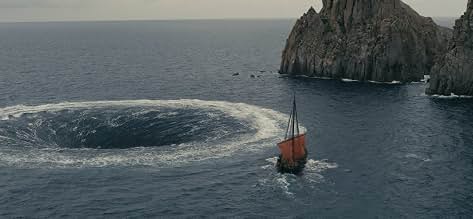
But the argument happening across a lot of right-leaning media and social accounts right now isn’t really about Nolan’s film. It’s about a version of ancient Greece that never existed, built on top of a poem that most of the loudest critics clearly haven’t reread since high school — if ever.
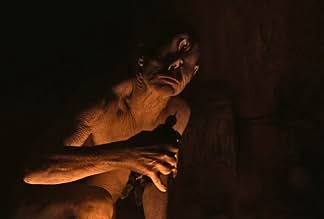
The backlash, briefly
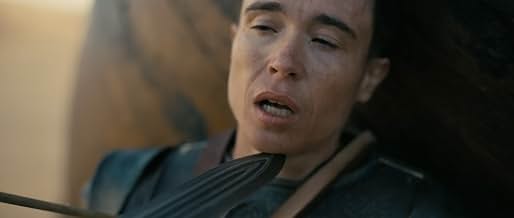
The casting drew fire well before release. Commentary focused heavily on Elliot Page, a trans actor previously in Nolan’s Inception, playing Sinon a soldier at Troy. One news anchor, discussing the film in May, described Achilles as history’s most famous warrior and objected to him being played by “a transgender woman,” getting the actor’s gender, the character’s mythological status, and the actual role all wrong in a single sentence.
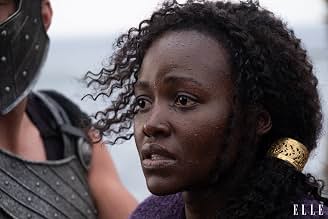
Lupita Nyong’o’s casting as Helen drew similar complaints about “historical inaccuracy” — despite Helen of Troy being, again, a figure from myth rather than the historical record. Elon Musk went further, accusing Nolan of “desecrating” the poem to chase awards attention.
Nolan’s own response has been fairly blunt. Speaking to the Telegraph, he called the pre-release backlash “irrelevant,” noting that arguments over a film that hasn’t been seen yet are arguments about nothing, since no one having them actually knows what the film is.
Now that reviews are out, the criticism has shifted from casting to content — commentators have zeroed in on a plot thread involving the “Sea People” invading Greek lands, which turns out to be a rumor stoked by the bad behavior of the Greeks’ own soldiers, and read it as a pointed jab at present-day anti-immigration rhetoric.
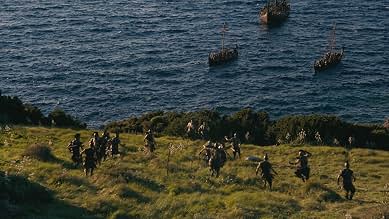
None of this is really a fight about the movie. It’s a fight about what people want Homer to have meant.
What the poem is actually about
Set aside the discourse and go back to the text, and the Odyssey is a strange choice for a manifesto of dominance. Its central concerns are:
- Nostos (homecoming). The whole poem is Odysseus’s ten-year, grief-soaked struggle to get back to his wife, his son, and his kingdom — not to conquer anything new, but to restore an order he already lost.
- Xenia (hospitality). Greek culture treated guest-friendship as sacred and divinely protected. The poem’s moral scorecard runs on this axis: the Phaeacians, who host Odysseus properly, are the good guys; the Cyclops, who eats his guests instead of feeding them, is the monster. Hospitality to the stranger, not suspicion of him, is the marker of civilization in Homer’s own framework.
- Cunning over brute force. Odysseus is explicitly not an Achilles. He wins through disguise, patience, self-restraint, and strategy — tricking the Cyclops, stringing along the suitors, holding his temper for years. The poem’s hero is a schemer, not a strongman.
- Loyalty under pressure. Penelope and Telemachus hold the household together for twenty years against enormous pressure to give up, while Odysseus himself is repeatedly tested by temptation (the Sirens, Circe, Calypso) and doesn’t always pass cleanly.
- Fate versus recklessness. The gods intervene constantly, but Homer is fairly clear that human impulsiveness — Odysseus taunting the blinded Cyclops, his men opening the bag of winds, eating the cattle of the sun — is what turns a hard journey into a catastrophic one.
That’s the actual thematic architecture: homecoming, hospitality toward outsiders, intelligence over might, and the costs of arrogance. It is very hard to build a case for hierarchical, dominance-based masculinity out of a poem whose hero survives specifically by not being Achilles.

Where the “Bronze Age” fantasy comes from
The reading being projected onto Nolan’s film didn’t start with the film. It’s an import from a specific corner of online culture: the “manosphere’s” romance with antiquity as a lost golden age of unrestrained patriarchal power.
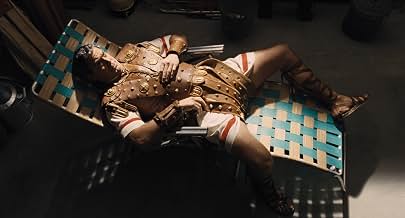
The clearest expression of this is the so-called “Bronze Age Mindset,” popularized by the pseudonymous influencer Bronze Age Pervert, who calls for a return to an imagined Homeric world of pirates, warriors, and tyrants where “superior” men rule by force and are treated as gods. This framework isn’t really interested in the Odyssey as a poem; it’s interested in antiquity as a costume for arguing that modern equality and feminism have made men soft.
That’s also, not coincidentally, exactly the crowd that treated Zack Snyder’s 300 as a documentary rather than a stylized allegory.
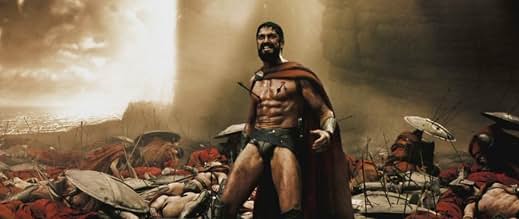
Historians and classicists have been clear for years that these “swords and sandals” films function as modern political fables, not records of how Sparta or the Homeric world actually operated.
What actual antiquity looked like
This is where the history gets flattened along with the poem. The real Greek world the manosphere claims to admire bears little resemblance to the one in its imagination:
- It ran on civic restraint, not unchecked aggression. Greek civic culture placed heavy weight on duty and the suppression of visible emotion — closer to Stoic discipline than to the chest-thumping dominance fantasy sold online.
- It was a slave economy. The idealized “golden age” depended on massive, brutal systems of enslavement — an inconvenient detail that tends to disappear from the Hollywood version.
- It was thoroughly multicultural. Greek city-states weren’t an isolated ethnic fortress; they were a trading network stretching across the Mediterranean, with colonies in southern Italy, Sicily, North Africa, and the Black Sea. Greek cities relied on enslaved people from Thrace and Scythia and worked alongside mercenaries and traders from Phoenicia, Lydia, and Phrygia. Greek identity was defined by shared language and religion against outsiders they called “barbarians” — but that’s a cultural line, not a racial or national one, and it existed precisely because the ancient Mediterranean was so interconnected.
So a film that puts a Kenyan-Mexican actress in the role of Helen, or stages a subplot skeptical of xenophobic panic about “invaders,” isn’t some woke violation of the “real” ancient world. If anything, it’s closer to the messy, cosmopolitan Mediterranean that actually existed than the ethnically sealed warrior-fortress of the internet imagination.
The irony
Commentators sympathetic to Nolan have noted the strange position this puts his critics in: a political movement that claims to be defending Western civilization is furious at one of that civilization’s foundational texts for meaning something other than what they assumed it meant. Homer’s poem isn’t a brief for domination — it’s a poem about a man who wins by being smarter than his enemies, who is undone by his own pride more than once, and whose household survives war and time through loyalty and patience rather than conquest. The Sirens tempt, the suitors overreach, the Cyclops abuses a sacred hospitality code, and the guy who makes it home is the one who thinks before he swings a sword.

If Nolan’s Odyssey frustrates people expecting a Bronze Age power fantasy, that’s not because the film has betrayed Homer. It’s because Homer never wrote that story in the first place.


Leave a Reply