
Empty hallways. Fluorescent lights buzzing over stained carpet. A hotel corridor at 2 a.m. with no one in it. In the last few years this specific flavor of dread has become its own genre — you can put a name to it now, and the internet has: liminal space.
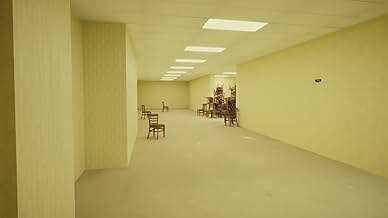
But before it was a meme format and a horror-movie pitch, it was a mood that a handful of filmmakers had already mastered. And nobody more thoroughly than David Lynch.
What makes a space “liminal”
The term, borrowed from anthropology, describes places built for passing through rather than staying — thresholds, not destinations. Airport terminals at 2 a.m., stairwells, empty malls, hotel corridors, indoor playgrounds after closing.
What makes them unsettling isn’t any single sinister detail; it’s the absence of one. Your brain has a template for what these spaces are supposed to look like — full, active, populated — and when that template doesn’t match reality, it registers as wrong before you can articulate why.
Two things tend to be doing the work:
- Broken context. A hallway is supposed to have people walking through it. A playground is supposed to have kids in it. Strip the expected activity out and the architecture itself starts to feel accusatory.
- The uncanny. These spaces are often generic enough — the same fluorescent tube lighting, the same looping carpet pattern, the same drop ceiling — that they trigger a false sense of memory. You feel like you’ve been here, even though you haven’t. That’s not comfort. It’s closer to déjà vu with the floor pulled out from under it.
we’ve been facing the empty space for a while
The recent explosion is real — Severance (2022–) turned the fluorescent-lit corporate hallway into prestige television, I Saw the TV Glow (2024) filtered teenage dissociation through a surreal, shifting high school, and the internet’s “Backrooms” creepypasta jumped from a 2019 4chan thread — inspired, fittingly, by a photo of an abandoned furniture store in Wisconsin — all the way to the 2026 A24 feature film starring Chiwetel Ejiofor and Renate Reinsve. The aesthetic now has its own visual dialect: yellow walls, drop ceilings, damp carpet, the hum of unseen machinery. But horror has been mining this exact discomfort for almost the entire history of the genre.
Robert Wise’s The Haunting (1963) built dread almost entirely out of empty corridors and unreliable architecture inside Hill House, decades before anyone had a word for it.
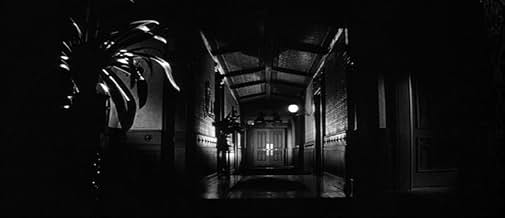
Jessica Hausner’s Hotel (2004) found the same unease in a sparsely staffed Alpine resort.
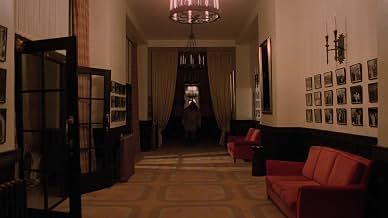
Stanley Kubrick’s The Shining (1980) turned the Overlook’s endless, geometrically impossible hallways into a map of a man’s collapsing sanity.
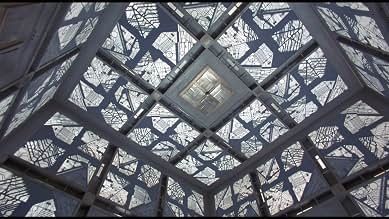
Cube (1997) trapped its cast in a maze of identical, deadly rooms with no memory of how they got there — a film often cited as the direct ancestor of the modern “escape room” aesthetic that Backrooms-style media borrows from.
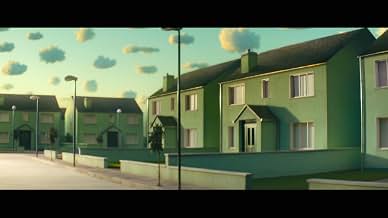
Vivarium (2019) did the same thing horizontally, with a suburb of identical green houses that never ends.
Skinamarink (2022) pushed it further inward, turning a child’s own house into something that reshapes itself in the dark.
What’s changed isn’t the feeling — it’s the vocabulary. “Corporate ennui” and “the Backrooms” gave a decades-old visual language a name and a meme-ready aesthetic. The dread itself is a rerun.
David Lynch: the master of the liminal space
If liminal space is now a recognizable subgenre, David Lynch was building fluent, feature-length arguments in it before it had a name. Lynch doesn’t use empty, in-between spaces as set dressing. Trained as a painter, he treats architecture the way dreams treat geography — bending it to track memory, guilt, and identity rather than to represent anywhere real. His spaces aren’t backdrops for a psychological unraveling; they are the unraveling.
A few of his recurring tools:
- Rooms without honest boundaries. Lynch strips interiors of normal architectural logic and hides alternate realities behind heavy curtains, treating them as thresholds rather than walls.
- The road to nowhere. Headlights eating up dark highway becomes a physical stand-in for a mind splitting in two — identity dissolving somewhere between one exit and the next.
- Dead time. Deserted diners, gas stations frozen in mid-century Americana, suburban streets at 3 a.m. — these aren’t just quiet, they’re stuck, holding patterns where time itself seems to have stalled.
- Sound as disorientation. Low industrial hums, unplaceable room tone, backwards audio played forward — Lynch destabilizes your ears at the same time he destabilizes the space, so the unease never has anywhere safe to land.
The Red Room (Twin Peaks / Fire Walk With Me)
Probably the single most famous liminal space in the history of the medium. It’s explicitly a waiting room wedged between cosmic good and evil — an infinite series of identical chambers broken only by red velvet curtains, its floor a stark black-and-white chevron that messes with your depth perception almost like visual static.
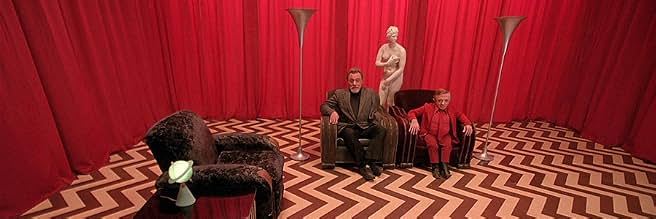
Time doesn’t behave normally inside it; dialogue is spoken backwards, then replayed forward, so even the sound of the room refuses to sit in a normal timeline.
The Corridor (Lost Highway, 1997)
The protagonist’s own house contains a hallway so dark it functions less like a passage and more like a mouth. Characters don’t walk into it — they vanish into it.
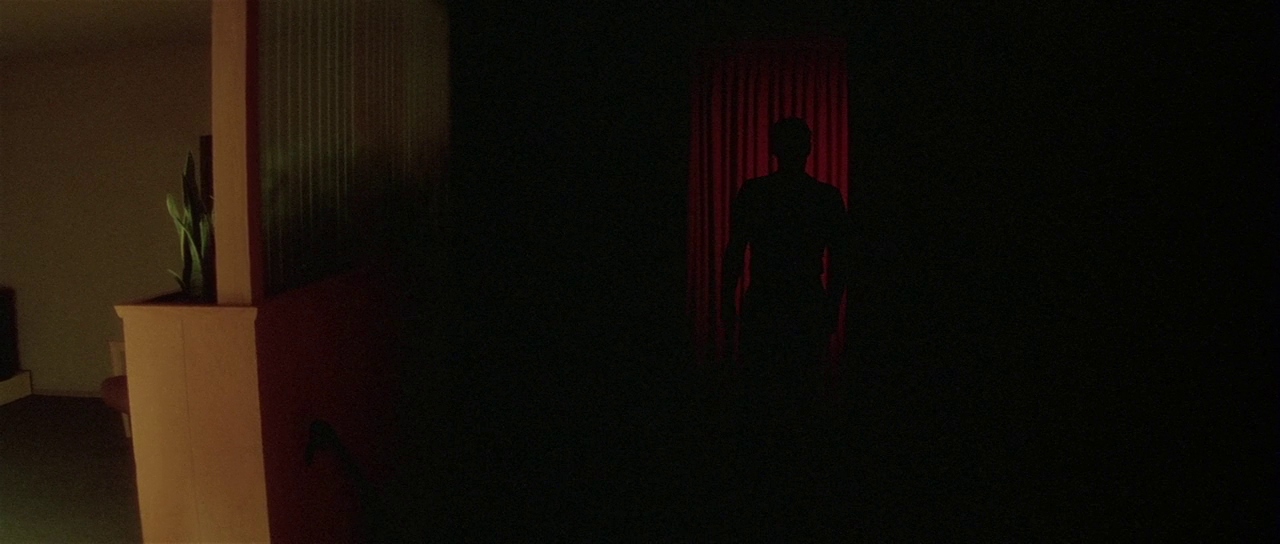
It’s a domestic space turned into an architecture of repression, a hallway built to swallow a memory the character can’t afford to keep.
Winkie’s Diner and Club Silencio (Mulholland Drive, 2001)
A brightly lit diner parking lot — about as mundane a liminal space as exists in American life — becomes the site of the film’s most purely terrifying scene, staged behind a dumpster in the kind of space everyone ignores.

Later, Club Silencio, a half-empty late-night theater, sits right on the seam between illusion and reality; its emcee tells the audience outright that everything they’re hearing is a recording — “no hay banda” — right as the dream holding the film together starts to come apart.
The Radiator (Eraserhead, 1977)
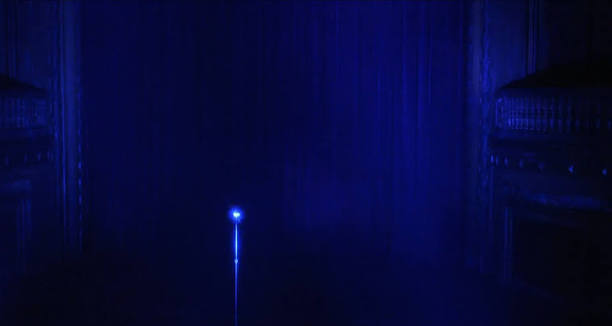
Lynch’s feature debut turns an entire industrial cityscape into one long liminal space, but its purest example is smaller: a radiator in Henry Spencer’s cramped apartment that functions as a literal portal to a stage where the Lady in the Radiator performs.
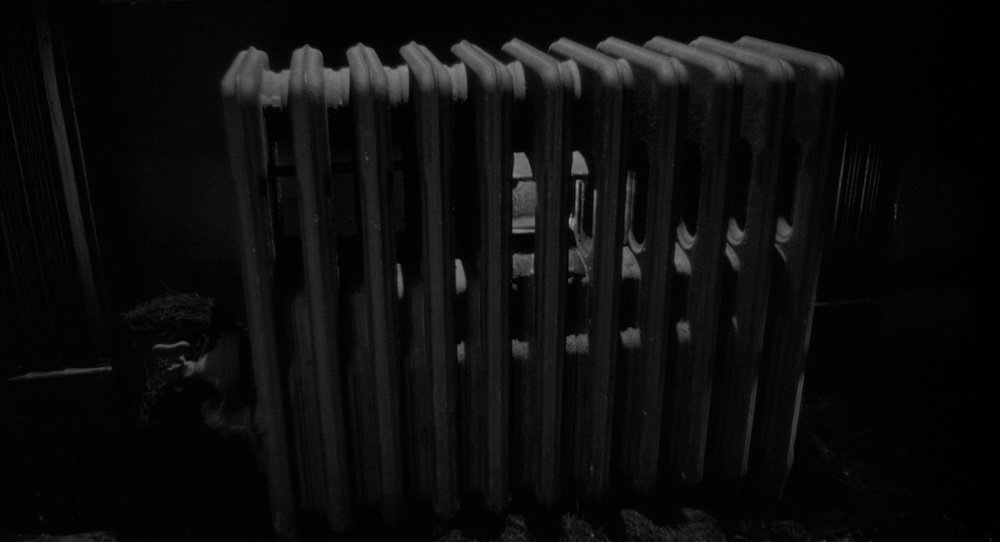
It’s the same trick in miniature — a mundane household fixture treated as a threshold into somewhere the film’s internal logic can’t otherwise explain.
nothing is everything
Lynch’s catalog is deep enough that the examples above only scratch it. Blue Velvet (1986) turns the too-perfect, sun-bleached suburb of Lumberton itself into a liminal space — a neighborhood staged like a stock postcard that curdles the moment the camera drifts past the picket fences.

And Twin Peaks: The Return (2017) doubles down decades later with the “Fireman’s” theater in the void above the convenience store — an audience of one watching cosmic events unfold on a screen inside a room that exists nowhere on any map.
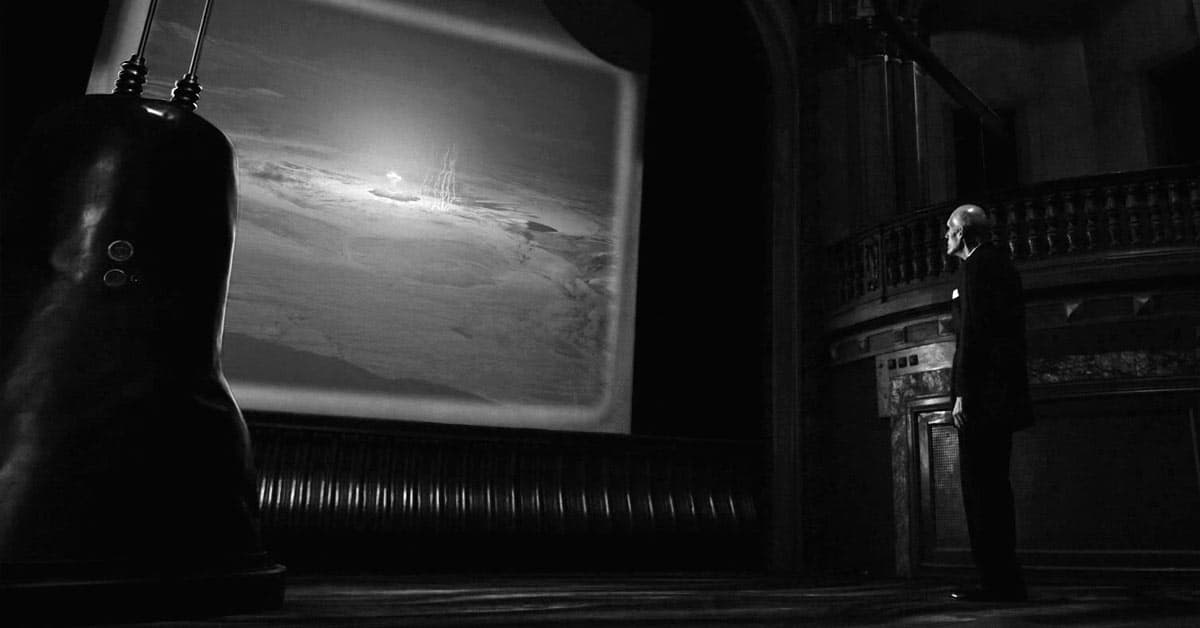
Liminal space horror isn’t a 2020s invention wearing a trendy name — it’s a decades-old visual grammar that finally got a label the internet could pass around. What Lynch understood earlier and more completely than almost anyone is that these spaces aren’t scary because something is in them. They’re scary because of what their emptiness implies about the person moving through them — a mind that’s lost its bearings, a memory it can’t face, an identity coming apart at the seams. The corridor was always the point. We just started giving it a name.
 Welcome To My Ego
Leave a comment