
Somewhere in the last decade, American pop culture quietly slid back into shadow. Detectives are broke and disillusioned again. Institutions can’t be trusted. Everyone with money is hiding something, and everyone without it is one bad break from becoming a mark.
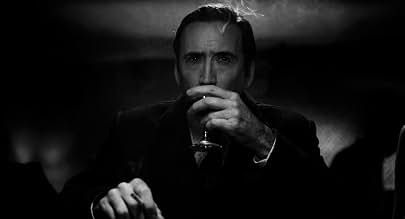
Call it a coincidence that neo-noir has surged back into prestige television and awards-season cinema at the exact moment American political life curdled into a decade of self-dealing, grift, and post-truth exhaustion — but noir has never been a coincidence. It’s a mood ring. It always tells you what the country is actually feeling underneath what it’s saying out loud.
The genre that only shows up when trust breaks
Film noir wasn’t invented in a vacuum. Classic noir crawled out of the wreckage of World War II — a genre for a country that had just watched its certainties get vaporized and didn’t entirely believe the official story anymore.
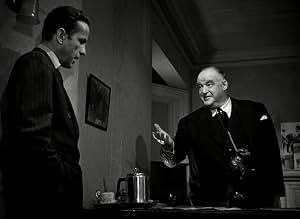
It’s not an accident that the genre’s golden age (The Maltese Falcon, 1941; Double Indemnity, 1944; Out of the Past, 1947) coincided with the era of the “five-percenters” — the postwar fixers who turned Washington influence into a commission-based business, and whose schemes helped expose bribery running through the Bureau of Internal Revenue itself.
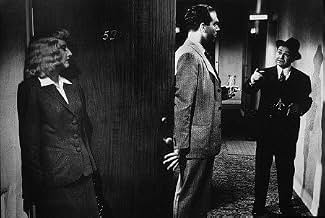
Noir’s cynical private eyes and doomed femmes fatales weren’t escapism. They were a funhouse mirror held up to a country quietly realizing that the people running things were on the take.
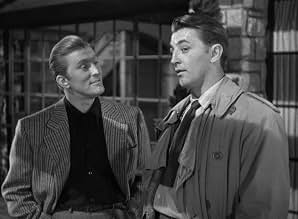
Every time American corruption has spiked since, noir has resurfaced to process it. That’s the pattern worth tracing — and it’s why the genre’s current comeback isn’t really about Hollywood running out of ideas. It’s about history rhyming.
Watergate and the collapse of the confident 1970s
If the 1940s gave noir its birth, the 1970s gave it its most enduring political voice. The Nixon administration’s illegal surveillance, obstruction of justice, and secret slush funds didn’t just end a presidency — they broke something in the national psyche that hasn’t fully healed.
Vice President Spiro Agnew resigning over bribery and tax evasion before Nixon even went down only deepened the sense that corruption wasn’t an aberration, it was structural.
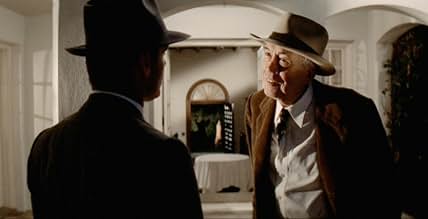
The neo-noir that emerged from that decade absorbed the wound directly. Chinatown (1974) is the clearest statement of the era’s despair: a private eye who thinks he’s uncovering a straightforward case of adultery and water-rights fraud instead stumbles into incest, murder, and a conspiracy so entrenched that exposing it changes nothing. The film’s closing line — “Forget it, Jake, it’s Chinatown” — became shorthand for a whole generation’s realization that the powerful don’t get punished; they get richer.
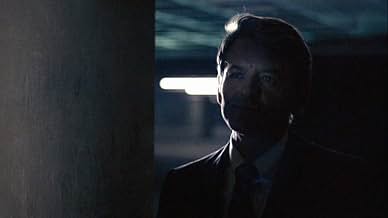
All the President’s Men (1976), released just two years after Nixon’s resignation, told the Watergate story almost as procedural noir: two reporters chasing a conspiracy through parking garages and anonymous phone calls, uncovering rot that goes all the way to the top of the government itself. Where Chinatown fictionalized the despair, All the President’s Men documented the actual mechanics of it — and both films share the same fundamental noir conviction: that the truth is discoverable, but discovering it doesn’t guarantee justice.
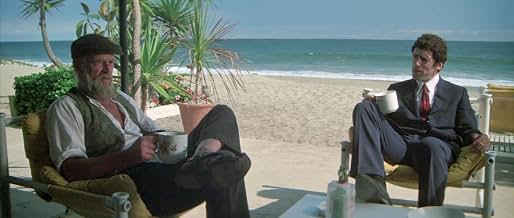
The rest of the decade followed suit. The Long Goodbye (1973) turned Philip Marlowe into a relic wandering a Los Angeles that no longer had any use for his old-fashioned code. Night Moves (1975) buried its detective’s personal life in the same rot he was investigating. Even the era’s sun-drenched, brightly lit visual style — a departure from the shadowy black-and-white of the 1940s — read as its own kind of cynicism: corruption doesn’t need shadows to hide in anymore. It happens in broad daylight, in plain sight, and nobody stops it.
Every subsequent scandal, right on schedule
The pattern doesn’t stop there. The 1980s Savings & Loan crisis — over 700 failed institutions, roughly $160 billion in losses, and the “Keating Five” scandal implicating five sitting senators — arrived alongside a neo-noir wave that traded Watergate’s daylight cynicism for something slicker and more seductive: Body Heat (1981) and Blood Simple (1984) dressed corruption up as desire, as if to say the rot had gotten so normalized it could pass as glamour.
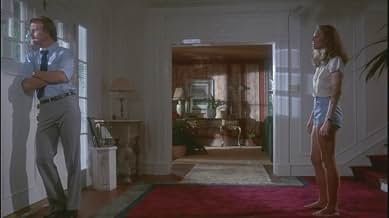
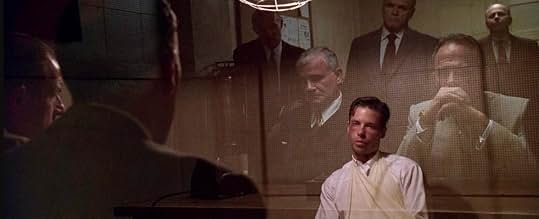
The 1990s “super-lobbyist” era, epitomized by Jack Abramoff’s influence-peddling machine, ran parallel to a neo-noir boom that got knottier and more self-aware — L.A. Confidential (1997) built an entire plot around police corruption dressed up as public order, while Pulp Fiction (1994) treated the whole moral framework of crime as something to be shuffled and remixed rather than resolved.
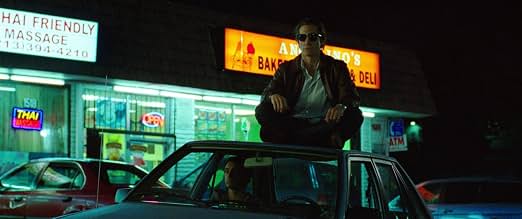
And the 2008 financial crisis — Wall Street, ratings agencies, and mortgage lenders colluding their way into a collapse nobody with real power paid for — produced its own noir reckoning. No Country for Old Men (2007) staged corruption as something almost cosmic and unstoppable. Nightcrawler (2014) turned the camera on media complicity itself, following a man who doesn’t just profit from decay, he actively manufactures more of it for content.
Every one of these cycles follows the same rhythm: systemic corruption exposed, public trust broken, and noir arriving a beat later to metabolize the damage.
Which brings us to now
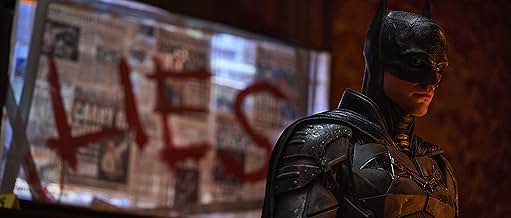
The neo-noir wave of the Trump era fits the pattern almost too neatly. It’s a body of work — Nightmare Alley (2021), Love Lies Bleeding (2024), Sugar (2024), True Detective: Night Country (2024), Prime Video’s Spider-Noir (2026), even The Batman (2022) with its detective-noir bones grafted onto a superhero frame — that trades the fedora for something more diffuse: institutional distrust as a permanent atmospheric condition rather than a plot twist to be resolved. These aren’t stories where a lone hero uncovers the conspiracy and restores order. They’re stories that assume the conspiracy going in, because audiences already do too.
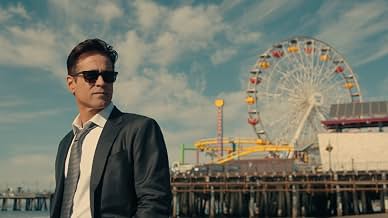
That’s the real shift. Classic noir and even ’70s neo-noir still treated corruption as a discovery — something a Jake Gittes or a Woodward and Bernstein had to dig up. Trump-era noir treats it as ambient weather. Nobody in Nightmare Alley or Sugar is shocked that the powerful are rotten; the drama comes from what people do knowing that, going in.
That’s a genuinely different posture, and it maps onto a decade defined — as the era’s critics would frame it — by a level of self-dealing and institutional erosion unseen since the Gilded Age robber barons: extreme polarization, a “post-truth” information environment where facts themselves became contestable, and a general public sense that the mechanisms meant to hold power accountable simply stopped working.
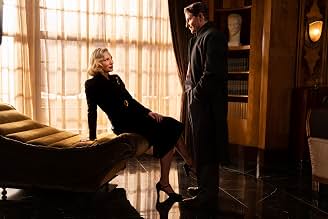
Noir has always been the genre America reaches for when it stops believing the system will fix itself. It reached for it after the war. It reached for it after Watergate. It reached for it after the S&L crisis, after Abramoff, after 2008. That it’s reaching for it again now isn’t a marketing trend — it’s the culture doing what it always does when trust breaks: retreating into shadow, sizing up the wreckage, and telling itself the truth in the only genre built to hold it — that we live in an era where nothing is real and everything is for sale.
 Welcome To My Ego
Leave a comment